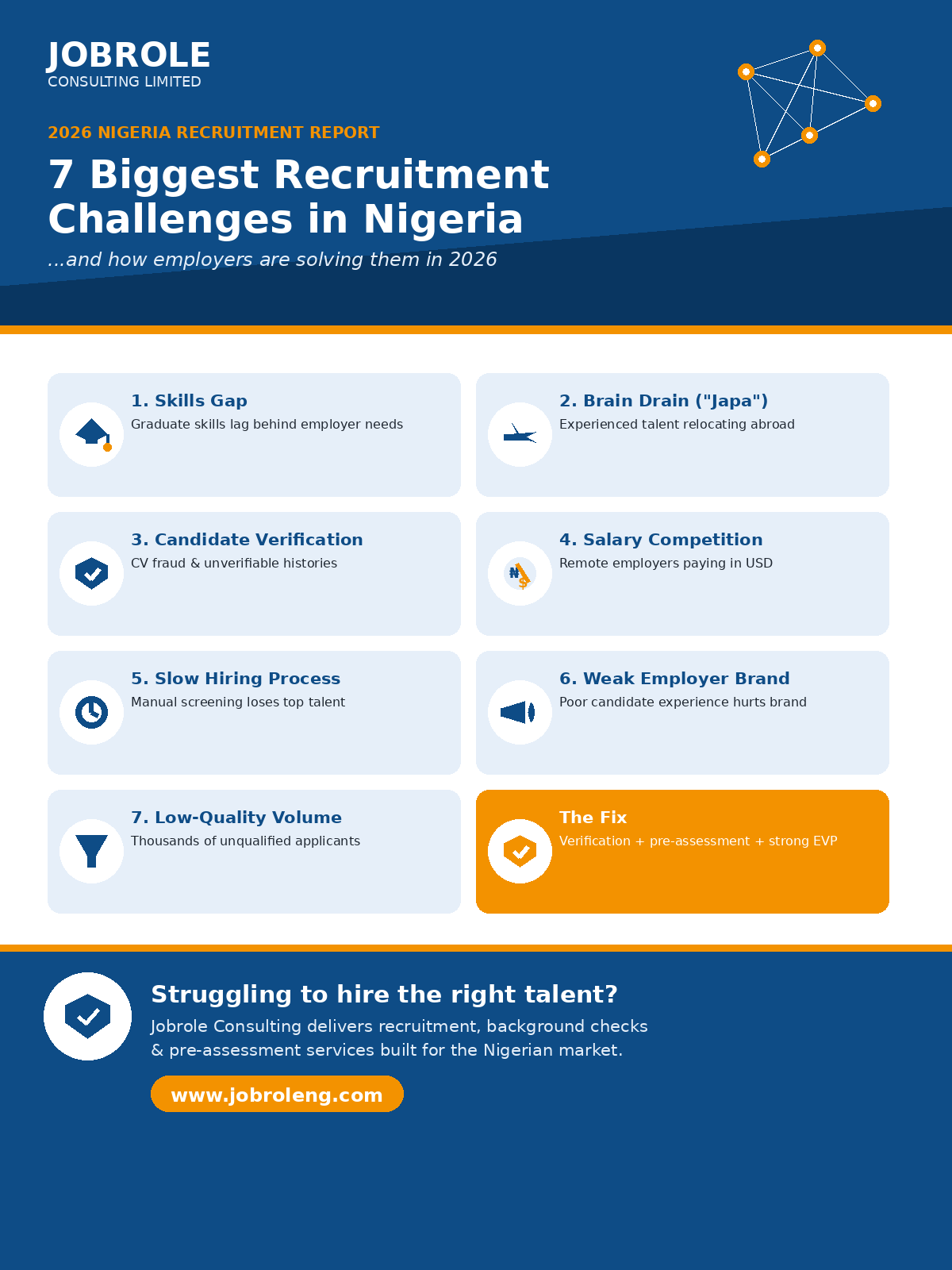
Nigeria’s labour market looks deceptively healthy on paper. Official unemployment sits in the low single digits, yet employers across Nigeria still report months-long vacancies for skilled roles. The gap between headline numbers and hiring reality is exactly what makes recruitment such a persistent challenge for Nigerian businesses in 2026. Whether you run a fast-growing fintech, a manufacturing plant, or a mid-size professional services firm, the recruitment industry challenges below are shaping how, and how well, you hire this year.
1. The Skills Gap Between Graduates and Employer Needs
Nigeria produces hundreds of thousands of graduates every year, but the skills employers need most, often lag behind what tertiary institutions teach. Recruiters end up screening large applicant pools to find a handful of candidates who are genuinely job-ready, which stretches time-to-hire and inflates recruitment costs. Structured skills assessments and partnerships with training providers are increasingly the only reliable way to close this gap before a hire is made.
2. Brain Drain Is Draining Experienced Talent
The “Japa” wave, Nigerians relocating abroad for better pay and stability, has hit mid-to-senior professionals especially hard in healthcare, IT, engineering and finance. According to labour market analysis covering 2026, low official unemployment masks much higher underemployment, meaning experienced, work-ready professionals are scarcer than headline numbers suggest. Every senior hire a Nigerian employer makes today effectively competes against international employers offering foreign-currency salaries and relocation packages, which has pushed retention, not just recruitment, to the top of the HR agenda.
3. Verifying Candidates Is Still a Major Pain Point
Fabricated certificates, inflated job titles and unverifiable employment histories remain common in the Nigerian job market. Without a reliable background verification process, employers risk onboarding candidates who cannot perform the role they were hired for, a costly mistake in regulated industries like banking, healthcare and real estate. Structured reference checks, credential verification and pre-employment screening are no longer optional extras; they are risk-management essentials.
4. Salary Competition From Remote and International Employers
Remote work has permanently changed the Nigerian talent market. Skilled professionals, particularly in tech and digital roles, can now work for companies in the US, UK or Europe without leaving the country, earning far more than most local employers can match. This has forced Nigerian companies to rethink compensation structures, lean harder on non-salary benefits, and compete on culture, flexibility and career growth rather than pay alone.
5. Slow, Manual Hiring Processes Increase Time-to-Hire
Many Nigerian organisations still rely on manual CV screening, unstructured interviews and paper-based approvals. In a market where strong candidates receive multiple offers within days, a slow process means losing top talent to faster-moving competitors. Applicant tracking systems, AI-assisted shortlisting and clearly defined interview stages are becoming standard practice among employers who want to hire well and hire fast.
6. Weak Employer Branding and Candidate Experience
Candidates increasingly research a company’s culture, leadership and employee reviews before applying, and employer branding is set to matter more than ever in 2026, according to industry analysis. A poor candidate experience, ghosting, unclear job descriptions, no feedback after interviews, damages an employer’s reputation in a small, well-connected professional community.
7. High Application Volume, Low Candidate Quality
Nigeria’s large, youthful workforce means popular job postings can attract thousands of applications within days, most of them unqualified. This volume overwhelms HR teams without the right filtering tools and increases the risk of overlooking genuinely strong candidates buried in the pile. Pre-assessment testing applied early in the funnel is the most effective fix.
How Nigerian Employers Can Solve These Challenges in 2026
None of these recruitment industry challenges are unique to one sector, and none are unsolvable. The employers winning the talent war this year share a few habits: they verify every hire through proper background checks, they use pre-assessment tools to screen for real competence rather than polished CVs, they benchmark compensation regularly, and they invest in learning and development to retain the people they already have. Outsourcing recruitment and HR consulting to specialists who understand the Nigerian market can also compress hiring timelines significantly, freeing internal teams to focus on strategy rather than screening.
This is exactly the gap Jobrole Consulting Limited was built to close. From recruitment and background verification to pre-assessment, payroll and learning & development, Jobrole helps Lagos-based and pan-Nigerian businesses hire with confidence. If your organisation is rethinking its talent strategy for 2026, the Next Frontier Conference (NFC), Jobrole’s flagship business and entrepreneurship event, brings HR leaders, founders and industry experts together to unpack exactly these issues in person.
Frequently Asked Questions
What is the biggest recruitment challenge in Nigeria right now?
Most HR leaders point to the combined effect of the skills gap and brain drain: there are plenty of applicants, but too few who are both qualified and willing to stay long-term at local salary levels.
How can Nigerian companies compete with international remote employers on salary?
Few local employers can match foreign-currency pay directly, so the strongest response is a total-rewards approach: competitive local benchmarking, flexible work arrangements, clear career paths and genuine investment in employee development.
Why is background verification important in Nigerian recruitment?
With certificate fraud and inflated CVs still common, verification protects employers from costly mis-hires and is increasingly required for regulated roles in banking, healthcare and real estate.
How long does it typically take to hire in Nigeria in 2026?
Time-to-hire varies widely, but employers using manual, unstructured processes routinely lose candidates to companies with faster, tech-assisted screening and interview stages.
Conclusion
Recruitment in Nigeria will keep getting more competitive, not less, as remote work, brain drain and rising candidate expectations reshape the market. Employers who treat hiring as a strategic function, backed by verification, assessment and strong employer branding, will consistently out-hire those who don’t. The businesses that adapt fastest in 2026 will be the ones best positioned to attract and keep Nigeria’s best talent.
Ready to fix your hiring process? Talk to Jobrole Consulting about recruitment, background verification and pre-assessment support built for the Nigerian market.