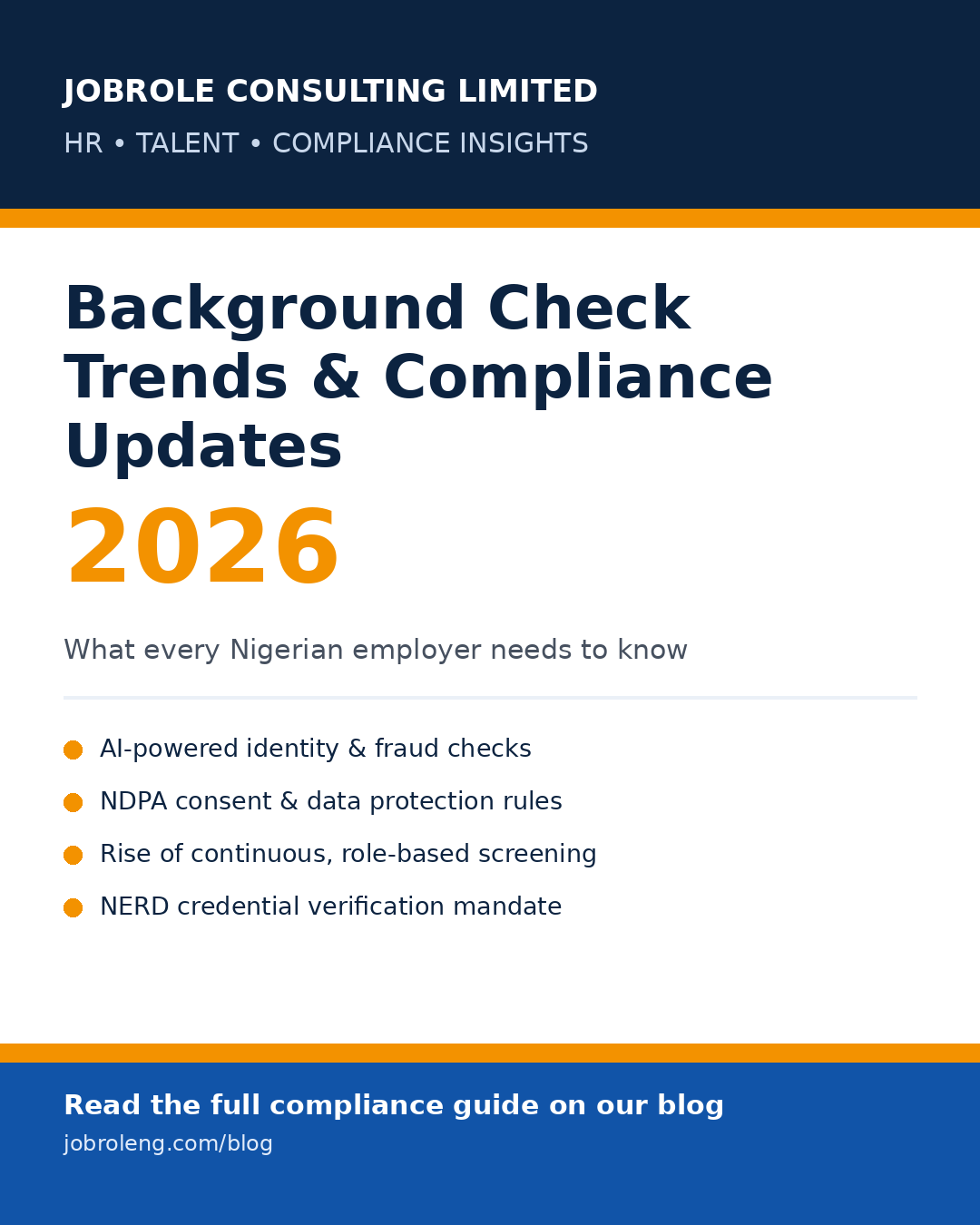
Hiring in 2026 looks very different from even two years ago. Candidates apply from anywhere, credentials can be forged with startling sophistication, and regulators on every continent are tightening the rules around how employers collect and use personal data. For Nigerian businesses, staying on top of background check trends 2026 is no longer optional. It is a direct driver of hiring quality, legal exposure, and brand trust.
This guide breaks down the technology shifts, regulatory changes, and practical steps every HR team should build into their screening policy this year.
Why Background Check Compliance Matters More in 2026
Employment fraud is growing faster than most internal HR processes can keep up with. Fake certificates, cloned identities, and forged reference letters are increasingly common across Nigeria’s job market, and employers who skip proper verification risk unqualified hires, internal theft, and reputational damage.
As Jobrole has covered before, fake certificates and job scams are on the rise in Nigeria, making verification a frontline defence rather than a formality.
At the same time, regulators are raising the bar on how that verification happens. Getting screening right in 2026 means balancing thorough due diligence with strict data protection and candidate fairness obligations.
Top Background Check Trends Shaping 2026
1. AI-Powered Screening and Identity Verification
Artificial intelligence is now embedded in resume analysis, identity verification, and fraud detection. AI tools help confirm that the person being screened is genuinely who they claim to be, flagging inconsistencies in documents and digital identity signals far faster than manual review. However, employers must document how these tools reach decisions, since automated hiring tools are drawing increasing regulatory scrutiny.
2. Continuous and Lifecycle Screening
Background screening is shifting from a one-time, pre-hire event to an ongoing process. Organisations in safety-sensitive, financial, or regulated roles are adopting periodic re-checks throughout the employment lifecycle, not just at the point of hire, to manage risk on a continuous basis.
3. Role-Based, Risk-Based Screening
Blanket screening packages are being replaced with tailored checks matched to the specific risk profile of each role. This reduces unnecessary checks, controls cost, and is increasingly viewed as the more legally defensible approach when a screening decision is challenged.
4. Rising Digital Identity Fraud
Sophisticated fake identities, cloned documents, and manipulated National Identification Numbers are a growing global and local problem. Employers are pairing traditional background checks with stronger digital identity verification to close this gap.
Key Compliance Updates Nigerian Employers Should Watch
Nigeria Data Protection Act (NDPA) 2023
The NDPA remains the backbone of background check compliance in Nigeria. Employers must obtain clear, standalone written consent before running a check, explain exactly what will be verified, and follow the core principles of lawfulness, purpose limitation, and data minimisation. The Nigeria Data Protection Commission (NDPC) has also signalled that consent alone is a fragile legal basis in an employment relationship, given the power imbalance between employer and candidate, so screening policies should document a clear, lawful purpose beyond consent alone.
The National Employee Record Database (NERD)
The Federal Government’s NERD initiative, currently mandatory for public sector Ministries, Departments, and Agencies, is expected to extend credential verification requirements to private employers. Businesses that build strong, documented verification habits now will find it far easier to align once the programme expands.
Global Signals Worth Tracking
Employers with remote hires or international operations should also watch shifts abroad, including expanding fair-chance and ban-the-box rules and tighter FCRA enforcement in the United States, which continue to reshape how multinational employers structure screening workflows (First Advantage’s 2026 compliance trends overview; Global Background Screening’s 2026 law update).
Building a Compliant, Future-Ready Screening Policy
A strong 2026 background screening policy should include the following:
- A standalone, plain-language disclosure and consent form, separate from the offer letter or handbook.
- A documented, role-based screening matrix instead of a one-size-fits-all checklist.
- Clear data retention and access procedures that satisfy NDPA data subject rights.
- A fair, individualised review process for any adverse findings, rather than automatic disqualification.
- Regular audits of your screening vendor or in-house process to confirm continued alignment with NDPA and sector-specific rules.
For teams still relying on ad-hoc verification, it is worth revisiting the most common mistakes employers make in background checks, many of which become bigger liabilities under 2026’s tighter compliance environment.
Frequently Asked Questions
What is the biggest background check trend for 2026?
The shift toward continuous, role-based screening supported by AI-driven identity verification is the most significant trend, replacing static, one-time pre-hire checks.
Do Nigerian employers need consent before running a background check?
Yes. Under the NDPA, employers must obtain clear, standalone written consent and disclose exactly what will be verified before conducting any background check.
Conclusion
Background check trends 2026 point to one clear direction: screening is becoming smarter, more continuous, and more tightly regulated at the same time. Employers who update their policies now, rather than after a compliance gap surfaces, will hire with more confidence and far less legal risk.
Building a compliant, well-documented screening process does not have to slow down your hiring. With the right structure in place, verification becomes a competitive advantage rather than a bottleneck.